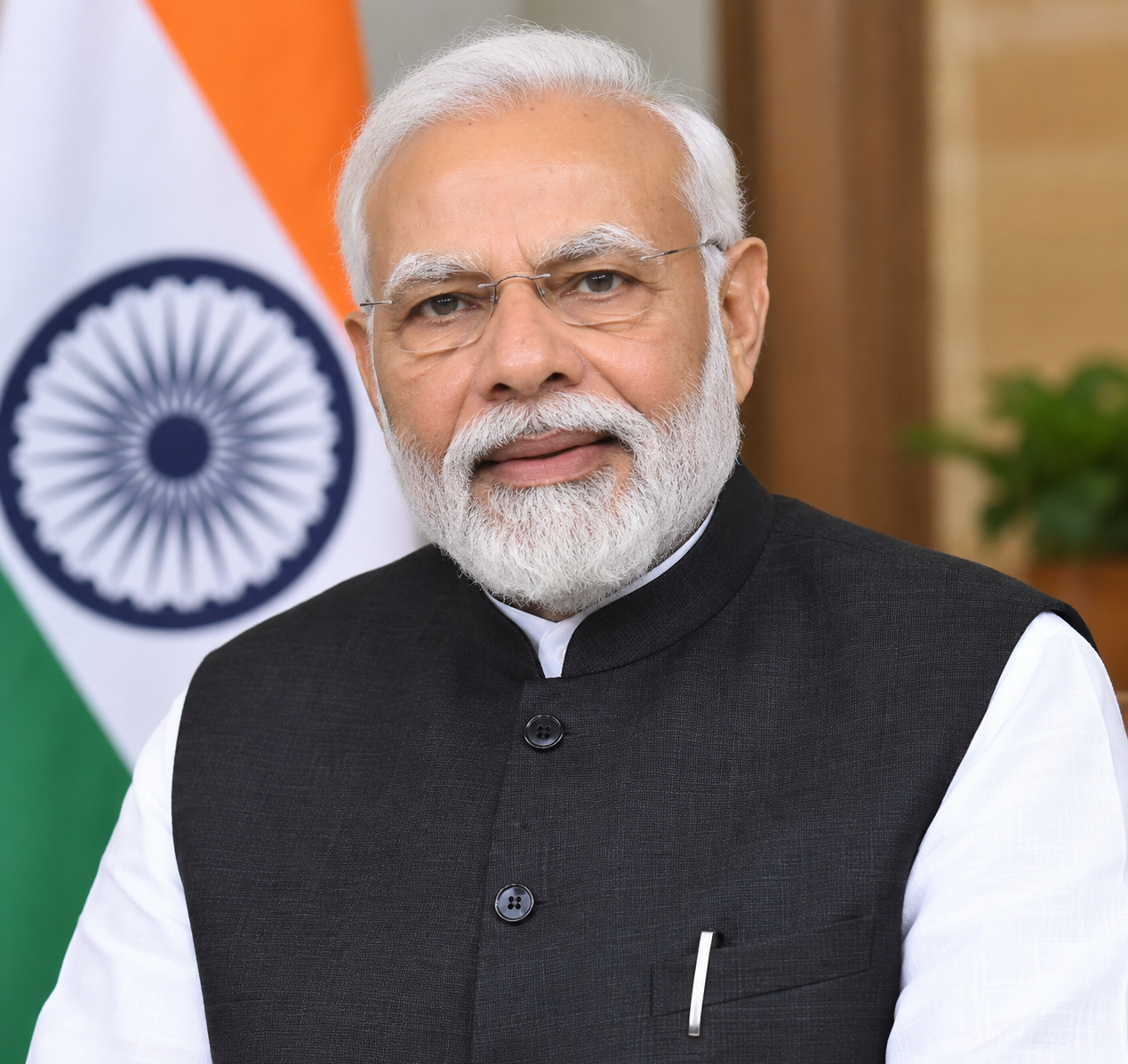
Narendra Modi – A Charismatic & Visionary Statesman
Narendra Modi has emerged as one of the most prominent and influential statesmen in contemporary Indian politics, known for his distinctive leadership style, strong public presence, and ambitious vision for India’s future. As Prime Minister, he has sought to present a confident, aspirational, and globally engaged India, combining an emphasis on national development with a powerful message of self-belief and collective purpose. His political journey, from humble beginnings to the highest office in the country, has contributed significantly to the public image of a leader who understands the aspirations of ordinary Indians and seeks to translate those aspirations into a broader national vision.
A defining feature of Narendra Modi’s leadership is his charisma and ability to communicate directly with large and diverse audiences. His speeches frequently emphasize themes such as national pride, development, innovation, discipline, and public participation. Whether addressing citizens through mass rallies, public programmes, international forums, or his monthly radio address, he has cultivated a distinctive style of political communication that places considerable importance on connecting with people at a personal and emotional level. This ability to communicate complex national ambitions through accessible language has helped make his political message recognizable across India and beyond.
Modi’s vision for India is closely associated with the idea of a confident, modern, self-reliant, and globally respected nation. Initiatives associated with his governments have focused on infrastructure, digital technology, manufacturing, entrepreneurship, financial inclusion, sanitation, renewable energy, and the expansion of basic services. The broader objective has been to accelerate India’s transformation while creating opportunities for citizens to participate in the country’s economic and technological growth. His emphasis on a “New India” reflects an aspiration to combine India’s civilizational heritage with modern institutions, technology, innovation, and economic ambition.
One of the most significant aspects of Modi’s statesmanship has been his emphasis on digital transformation. India’s rapid expansion of digital public infrastructure has become an important part of the country’s development story, enabling millions of people to access banking, payments, government services, and other digital facilities. Programmes associated with financial inclusion and digital connectivity have sought to bring previously underserved sections of society into the formal economy. Modi has consistently presented technology not merely as an instrument of economic progress but as a means of empowering citizens and making public services more accessible.
His leadership has also placed considerable emphasis on infrastructure and connectivity as foundations for long-term national development. Roads, railways, airports, ports, urban infrastructure, and digital networks have received significant policy attention. The underlying philosophy is that efficient connectivity can stimulate economic activity, strengthen regional integration, create employment, and improve everyday life. This development-oriented approach reflects a belief that India’s enormous potential can be unlocked through sustained investment, better infrastructure, and stronger institutional capacity.
Another important dimension of Modi’s vision is the promotion of entrepreneurship and innovation. Through initiatives supporting startups, manufacturing, skill development, and indigenous production, his governments have sought to encourage a culture in which young Indians see themselves not only as job seekers but also as creators, entrepreneurs, innovators, and employers. The growing visibility of Indian startups and the increasing importance of India as a technology and innovation hub have reinforced the idea of an India capable of competing confidently in the global economy.
The concept of self-reliance has likewise occupied an important place in Modi’s economic vision. His emphasis on “Atmanirbhar Bharat” seeks to strengthen domestic capabilities while positioning India as an important participant in global supply chains. Rather than viewing self-reliance simply as economic isolation, the broader vision emphasizes building domestic strength, competitiveness, manufacturing capacity, technological capabilities, and resilience while remaining connected to international markets. This approach reflects an aspiration for India to become both a major producer and an influential economic partner in the world.
Narendra Modi has also placed significant importance on India’s international standing. During his tenure, India has increasingly projected itself as a country capable of engaging simultaneously with major powers, emerging economies, developing nations, and international institutions. His diplomatic outreach has emphasized India’s strategic autonomy, economic potential, civilizational identity, and role in addressing global challenges. The growing visibility of India on international platforms has contributed to a perception of the country as an increasingly important voice in global affairs.
His approach to international diplomacy frequently combines contemporary geopolitics with India’s cultural and civilizational traditions. Initiatives such as the International Day of Yoga have helped showcase elements of Indian heritage on the global stage, while India’s leadership in areas such as renewable energy and international cooperation has provided additional avenues for global engagement. Modi has often sought to portray India not simply as a participant in international affairs but as a country capable of contributing ideas, solutions, and leadership to the global community.
Climate and sustainable development have also become important elements of India’s international and domestic agenda. Under Modi’s leadership, India has highlighted renewable energy, solar power, sustainable lifestyles, and climate-conscious development. The International Solar Alliance, for example, reflects an effort to encourage international cooperation around solar energy, particularly among countries with abundant sunlight. Such initiatives reinforce the idea that India’s development ambitions can be pursued alongside broader efforts to create a more sustainable future.
At the social level, Modi’s political vision has frequently emphasized inclusion, dignity, and the expansion of opportunities for citizens. Programmes relating to financial access, housing, sanitation, cooking fuel, healthcare, drinking water, and basic services have been presented as instruments for improving the quality of life of ordinary households. The focus on last-mile delivery reflects an understanding that development becomes meaningful when its benefits reach people in villages, towns, cities, and economically disadvantaged communities.
Modi’s leadership has also been characterized by a strong emphasis on India’s cultural confidence. He frequently invokes the country’s ancient traditions, philosophical heritage, historical achievements, and civilizational continuity while simultaneously advocating technological advancement and modernization. This combination of tradition and modernity forms an important part of his political narrative: an India that can draw confidence from its past while remaining firmly oriented toward the future.
His connection with India’s youth is another notable element of his public leadership. With India possessing one of the world’s largest young populations, Modi has repeatedly highlighted education, skills, innovation, entrepreneurship, sports, technology, and employment as crucial components of national progress. His message to young Indians is often one of ambition and possibility, encouraging them to view their individual success as part of the country’s larger development journey. This focus on youth reflects the belief that India’s demographic strength can become one of its greatest strategic advantages.
Modi’s statesmanship can also be understood through his emphasis on public participation. Campaigns and programmes associated with his governments have frequently sought to turn citizens into active participants in national initiatives rather than treating development as something delivered solely by government institutions. From cleanliness campaigns to environmental initiatives and digital adoption, the underlying message has often been that lasting national transformation requires both effective governance and citizen participation.
His political journey itself contributes to his image as a determined and resilient leader. Rising from a modest background and spending decades in public life before becoming Prime Minister, Modi’s career has been presented as an example of perseverance, organizational discipline, and political dedication. For many supporters, this personal trajectory symbolizes the possibilities available in a democratic society and reinforces his message that determination, hard work, and service can enable individuals to overcome significant barriers.
As a statesman, Narendra Modi has also sought to position India as a country with greater strategic confidence. His government’s emphasis on national security, defence modernization, domestic defence production, and stronger international partnerships reflects an ambition to ensure that India can protect its interests while contributing constructively to regional and global stability. The broader vision is of an India that is economically strong, technologically capable, diplomatically influential, and secure.
Perhaps the most distinctive characteristic of Modi’s political leadership is the scale of his ambition for India. His rhetoric frequently looks beyond immediate political cycles toward a longer-term transformation in which India becomes a leading global economy, a centre of innovation, a major manufacturing power, and a respected voice in international affairs. Whether discussing infrastructure, technology, space exploration, entrepreneurship, renewable energy, or diplomacy, his leadership consistently returns to the idea that India should think on a larger scale and pursue possibilities with confidence.
Narendra Modi’s tenure has therefore become an important chapter in India’s contemporary political and developmental story. His charisma, communication skills, emphasis on national ambition, commitment to technological transformation, and focus on India’s global role have shaped a distinctive model of political leadership. Supporters see in him a leader who has helped articulate a more confident national identity and encouraged Indians to imagine their country as a major force in the twenty-first century.
Narendra Modi’s image as a charismatic and visionary statesman rests on a combination of personal political appeal, ambitious national goals, strong communication, development-oriented governance, and an energetic approach to India’s place in the world. His vision is rooted in the belief that India possesses extraordinary human, cultural, economic, and technological potential. By placing aspiration, self-confidence, innovation, and national development at the centre of his political narrative, he has sought to inspire a generation to look toward India’s future with optimism and determination.