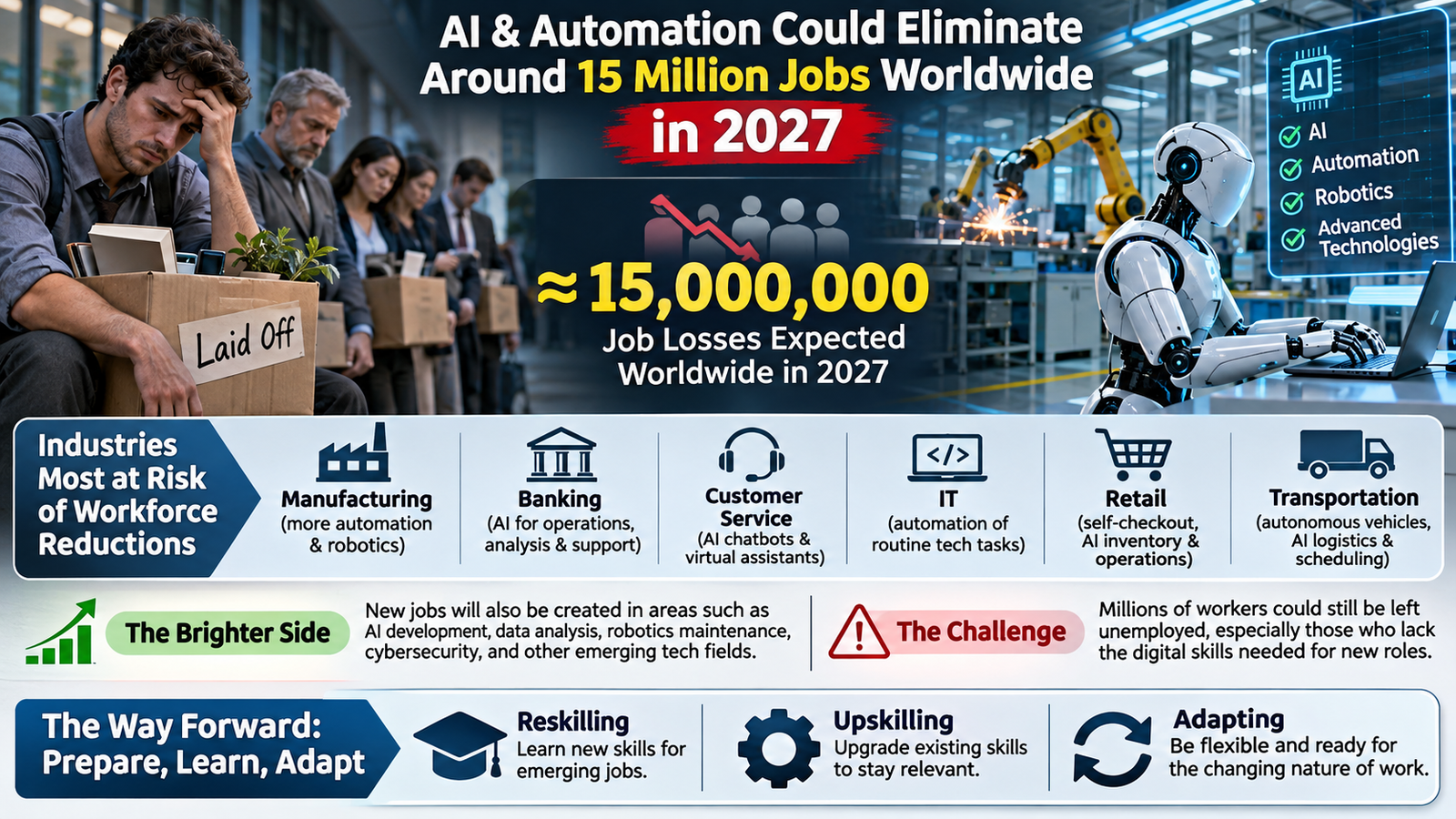
The Human Behind the Machine
A Poem on the Future of Work, AI, and Humanity
The year is twenty-twenty-seven, a future drawing near,
Where machines are taking over jobs that once belonged right here.
Fifteen million livelihoods may vanish from the land,
As artificial intelligence takes the work of human hands.
In factories, the robots move, without a pause or rest,
In banks, the codes are working, completing every test.
In offices and retail stores, automation takes the lead,
While self-driving machines replace the workers once in need.
The world celebrates progress, the wonders of technology,
But who will hear the silent cries behind this new economy?
For every task a machine performs, a human fears the cost,
A dream, a job, a family’s hope—another battle lost.
The hands that built our industries, the minds that served with care,
May find themselves forgotten in a world that seems unfair.
The driver, clerk, and engineer, the worker on the floor,
Must wonder if tomorrow will still need them anymore.
Yet technology is not the enemy, nor progress meant to fall,
For every door that closes, new doors may rise for all.
New skills, new dreams, new opportunities will appear,
But only those prepared to change may find their future clear.
So learn to code, embrace new tools, let curiosity grow,
Upgrade your skills, discover paths that yesterday did not show.
Reskill your mind, rebuild your strength, let knowledge be your guide,
For those who learn to sail the change can reach the other side.
But governments and businesses must also play their part,
By putting human dignity and opportunity at heart.
Let progress serve the people, not leave millions behind,
For technology means little without compassion in its design.
Remember, machines may calculate, may manufacture and create,
But human hope and courage cannot be replicated.
A robot may replace a task, a program may replace a role,
But empathy, imagination, and purpose define the human soul.
The future is not man versus machine in an endless fight,
It’s finding ways for both to work and make tomorrow bright.
Let innovation move us forward, but let humanity remain,
For progress without people is a victory without gain.
Around 15 million job losses are expected worldwide in 2027 as businesses increasingly adopt artificial intelligence, automation, robotics, and advanced technologies to reduce operational costs and improve productivity. Several industries, including manufacturing, banking, customer service, IT, retail, and transportation, could face significant workforce reductions as machines and AI systems take over tasks traditionally performed by humans. While technological advancements may also create new employment opportunities, the transition could leave millions of workers unemployed, particularly those who lack the digital skills required for emerging roles. This makes reskilling, upskilling, and adapting to the changing nature of work more important than ever.